






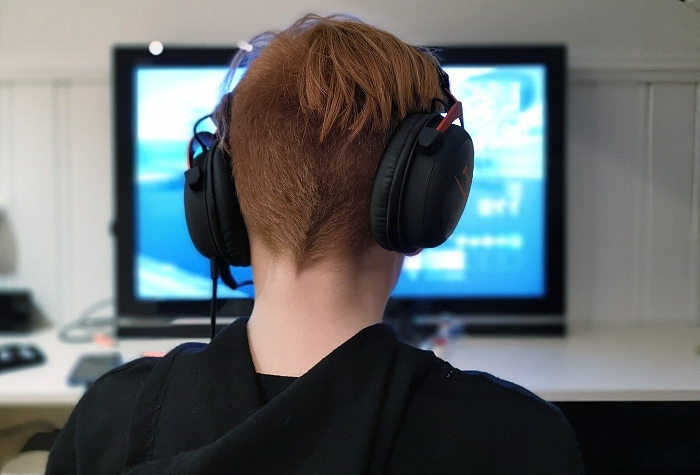
Relaxation is not a switch. It doesn’t happen the moment you sit down, instead it grows over time, unfolding quietly in the calm of rural areas or amid the bustle of busy cities.
Sometimes, it blends both worlds, arriving through a screen that brings city sounds into the stillness of your home.
This makes your screen the best form of relaxation you can get, but what exactly is on people’s screens when they want to relax? Let’s find out.
A loop of familiarity
When people relax, they don’t chase new experiences, they return to the familiar. That’s why some episodes of old sitcoms have billions of streams.
Not because they’re new, but because they ask nothing of you. People watch reruns of shows such as Friends, The Office, Modern Family or anything that doesn’t surprise.
The plot doesn’t matter anymore. What matters is rhythm, and dialogue they already know or beats they can predict. Laugh tracks become part of the background.
These shows are more than entertainment, they are anchors.
The silent draw of “nothing”
Some people want screens that do less, even almost nothing, such as ambient visuals, a fireplace, a slow train moving across snow or rain falling on a tin roof.
There is no plot or character — just quiet motion. YouTube is full of this, including 10-hour videos of city noise at midnight, a dog sleeping by a window, and lo-fi hip-hop animations.
Viewers don’t watch them like shows, instead they absorb them. The screen doesn’t lead — it follows the viewer’s state of mind.
Audio that slows time
Screens aren’t just for watching, they’re also for listening, such as podcasts, audio streams, soft sounds and sleep channels.
The goal is not excitement, it’s stillness. Some people use meditation apps, while others listen to story readings or ASMR content.
Tapping, whispering, brushing sounds, all with fixed frames or minimal motion.
This kind of slow sensory input mirrors a broader shift in how people spend their time and attention, as seen in how many are choosing to live more slowly.
Games without deadlines
Games used to mean scores, time limits and stress, but this is not always the case anymore. Some games are slow, and others never end.
Games such as Stardew Valley, Animal Crossing and Townscaper let you build, explore and repeat with no failure, enemies or real objectives.
They are tasks without consequence. This is important, because people play not to win, but to be somewhere else.
Puzzle games are also popular, with their simple mechanics, soft colours and quiet music. Providing just enough challenge to keep the mind occupied but not overwhelmed.
The pleasure comes from repetition. It’s mechanical, almost meditative. There is structure, but also no pressure.
Controlled interaction
Sometimes people want to do something, but gently. That’s where interactive content fits. These are not games or video, but something in-between.
Apps where you make choices, but nothing critical, such as interactive novels, click-through stories and visual journeys that let you choose direction.
The content moves at your pace. If you stop, it waits. If you continue, it responds. There is no rush, no urgency, just flow.
There’s also interest in light-reward systems, short tasks, bonuses and things to collect. Something like browsing a catalogue or discovering new items in a sandbox game.
Some people are drawn to promotions in the digital space, such as a casino free spins bonus, not to gamble, but to explore.
The low-pressure setting, combined with predictable mechanics, becomes its own form of relaxation.
Screens that think for you
People turn to screens when they don’t want to think hard. That’s not laziness, its fatigue, so they choose platforms that guide them.
This can include recipe videos that show without asking, home tours, time-lapse paintings, restoration clips and cleaning videos.
These videos provide direction and are process-driven. The viewer doesn’t need to participate, just watch. These are passive, yes, but they are also deeply satisfying.
One step leads to another and the end is always clear, much like how today’s online tools simplify everyday experiences, quietly taking over tasks the user doesn’t want to think about.
Stillness, framed
There is a reason why people film clouds, record streetlights from high apartments or set up a camera and walk away.
These are static captures of everyday life, framed, filtered and slowed. People seek these out.
On screens, they are timeless. You can leave and come back and nothing will change. The comfort is in the permanence and the lack of urgency.
Screens don’t just show action; they also hold it. They let the user choose to stop, pause or leave it running.
Not disconnection, but soft connection
What people do on screens during relaxation isn’t random or mindless — it’s deliberate.
Even if it looks passive, it serves a purpose. The content allows for decompression and helps the brain step back. Not everything is about productivity; sometimes, being still is what’s needed most.
Screens are tools. They mirror us and hold our distractions, comforts and silences. We are learning how to use them better.
Not to escape, but to rest. Some people do it with shows, while others with slow videos, simple games, music and soft sound. None of it is wrong. All of it is part of how we cope.
Tomorrow, there will be a new format or new channel — a new way to rest through pixels. However, the need behind it, to unwind and feel grounded, remains constant.
(pixabay image, free to use)









Recent Comments