






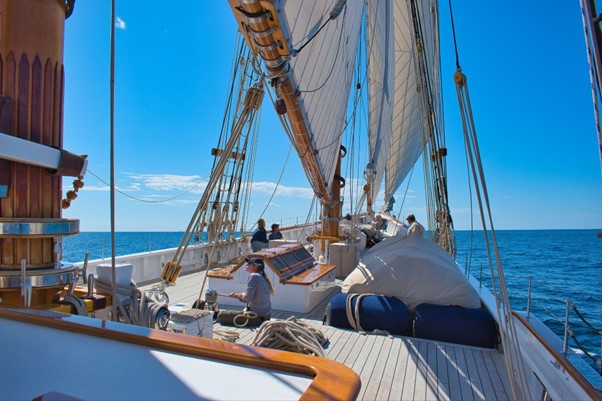
The salty air, the changing tide and the silent draw of the canvas with the wind make the experience unlike any other.
By joining your first sailing programme, you have a different experience of Britain, not through an overcrowded promenade, but through the water itself.
When one is on the deck of a small yacht, the cliffs look taller, the harbours are closer and more intimate, and the wildlife is nearer than anticipated.
A lot of first-time sailors will start with an RYA start yachting course, a hands-on course that helps to develop confidence without too much detail.
Tuition is a combination of practical seamanship and knowledge in safety, navigation, and teamwork.
Instead of studying theory alone in the classroom, the students study by navigating around sheltered bays and working ports.
The early introduction to the coastline makes it seem approachable and not a daunting location.
The Solent and the South Coast
One of the most renowned training grounds in Europe is located between the mainland and the Isle of Wight.
Because the Solent provides a variety of conditions over short distances, instructors may introduce close-quarters manoeuvres and sail management in manageable steps.
Although sheltered waters reduce exposure to strong swell, tidal streams still require caution.
With its racing heritage and bustling marinas, Cowes offers a vibrant maritime feel. Portsmouth Harbor’s old dockyard lends each voyage a feeling of tradition.
Clear navigation markers and regular anchorages help beginners by providing an opportunity to rehearse techniques frequently in a safe setting.
Why It Suits First Timers
Sheltered sections reduce undue movement, facilitating a speedy transition for novice sailors.
Plans can be modified if the weather changes because there are many ports within a few miles. Support services are always available, which gives students peace of mind on their first journeys.
Cornwall and the West Country
The coastline becomes more untamed as one moves west. Cornwall has turquoise shallows, secluded coves, and expansive headlands that rival those found in warmer climates.
Falmouth Harbour offers a spacious natural anchorage that is both confined enough to mitigate stronger conditions and large enough for training.
Quiet areas surrounded by forests are introduced by river estuaries like the Helford.
Focusing on sail trim and helming skills is encouraged by mooring among woodland banks, which feel worlds apart from bustling towns.
Even brief passages reveal spectacular vistas formed by centuries of Atlantic surf.
Building Confidence in Open Water
Students learn how a yacht reacts in conditions other than flat water by being exposed to significantly livelier seas.
By carefully selecting their paths, instructors make sure that learning is progressive rather than intimidating. Every successful tack over a windy channel reinforces the newly learned skill.
Scotland’s West Coast
The scenery changes to a mosaic of rocky islands and sea lochs north of the border. High hills frame the comparatively safe waters of the Firth of Clyde.
Voyages among peaceful anchorages begin at Largs and nearby marinas.
The Inner Hebrides, located further north, offer a feeling of isolation uncommon in southern areas.
Sightings of wildlife, such as seabirds circling overhead and seals lying on rocks, become an everyday occurrence.
Even though conditions might change quickly, knowledgeable instructors create itineraries that are appropriate for inexperienced crews.
Learning Through Changing Conditions
Adaptability is facilitated by varying breezes. When the wind increases, students exercise reefing sails, and when it decreases, they alter the trim.
Calm harbours alone cannot supply the practical understanding that is fostered by such variability.
Wales and the Irish Sea
Cardigan Bay and the Menai Strait provide two distinct experiences within close proximity.
The small canals and rapid tidal flow of the Strait, which runs between Anglesey and the mainland, pose challenges for sailors.
Beginners learn to respect timing and pilotage while staying inside safe boundaries under supervision.
In contrast, Cardigan Bay offers expansive views. Sometimes dolphins travel with yachts, giving training excursions a unique touch.
Crews can consider the lessons learned during the day at friendly overnight stops in smaller harbours like Aberaeron.
What to Expect From Your First Week Afloat
Forecasts and tide tables determine the rhythm of life on board. Planning meetings, chart work, and role distribution take place first thing in the morning.
Short trips between ports are common in the afternoons, where manoeuvres are practised. In the evenings, meals are shared and taught practices are discussed.
To provide everyone with experience with helming, sail handling, and basic navigation, tasks are rotated. As deck movements become natural and knots become ingrained, confidence gradually increases.
Students typically discover that their initial nervousness has subsided into quiet expertise by the end of the course.
Choosing the Right Location for You
The decision should be made based on personal preference. Individuals who are attracted to busy marinas and ancient ports might prefer the south coast.
Those with adventurous spirits who want dramatic landscapes may prefer Scotland or Cornwall. Accessibility is also important, especially in the case of shorter introductory programmes.
The British coast, wherever you start, is an amazing classroom.
There are chalk cliffs, granite headlands, wooded estuaries, and chains of islands that all help to create an environment that is influenced by the wind and water.
The first boarding is not only the beginning of the formal training but the beginning of a lifelong affair with the sea.









Recent Comments