






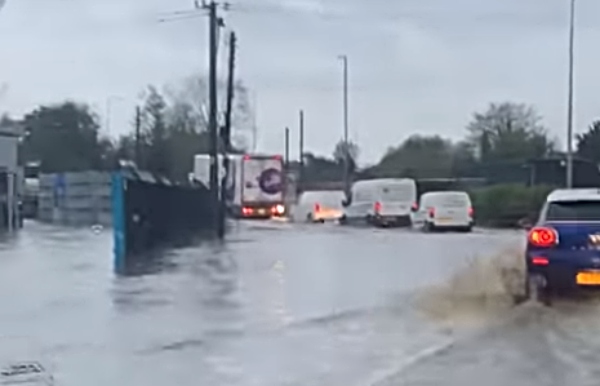
Every day, millions of us glance at a weather app on our phones to make decisions—what to wear, whether to cancel a picnic, or when to plant a garden.
We take this sliver of future knowledge for granted, but behind that simple icon of a sun or cloud lies one of the most complex and impressive scientific undertakings in the modern world.
Predicting the weather is a daily battle against chaos, requiring a symphony of global cooperation, cutting-edge technology, and expert human insight to forecast the future of our atmosphere.
Predicting the weather is like trying to solve a massive, ever-changing puzzle with billions of moving pieces.
It’s a high-stakes game of probability, where scientists use immense data to forecast outcomes in a chaotic system.
This is a far more complex challenge than calculating the fixed odds in a controlled environment, like a game at Casino Verde, because the ‘rules’ of the atmosphere are constantly interacting in unpredictable ways.
This complexity is what makes modern forecasting such a remarkable scientific feat.
Step 1: Gathering the Global Data Puzzle
A weather forecast is only as good as the data it is built on, and creating an accurate one begins with a colossal, non-stop data collection effort that spans the entire globe.
No single country can predict its weather in isolation, as atmospheric systems cross borders and oceans.
This requires a coordinated international effort to get a complete snapshot of the Earth’s atmosphere at any given moment.
This global puzzle is pieced together using a variety of high-tech tools:
● Surface Weather Stations: Over 10,000 automated stations on land and at sea constantly record temperature, air pressure, wind speed, and humidity at ground level.
● Weather Balloons (Radiosondes): Twice a day, at the exact same time, hundreds of balloons are released around the world. As they ascend, they transmit vital data about the vertical profile of the atmosphere—from the surface up to the stratosphere.
● Doppler Radar: Radar systems scan the skies to detect the location, intensity, and movement of precipitation. They are essential for tracking storms, tornadoes, and hurricanes in real-time.
● Satellites: Geostationary and polar-orbiting satellites are the eyes in the sky. They provide the “big picture,” tracking large-scale weather patterns, measuring cloud-top temperatures, monitoring sea ice, and even detecting wildfire smoke.
Step 2: The Power of Supercomputers and NWP Models
Once this constant stream of billions of data points is collected, it is fed into some of the most powerful supercomputers on the planet.
This is where the actual “prediction” part begins, through a process called Numerical Weather Prediction (NWP).
NWP models are, in essence, a virtual version of the atmosphere running on a supercomputer.
Here’s how they work:
● The computer divides the entire globe and its atmosphere into a massive three-dimensional grid.
● The model is programmed with a set of fundamental mathematical equations based on the laws of physics and fluid dynamics that govern the atmosphere.
● Using the initial data from the weather stations, balloons, and satellites as a starting point, the supercomputer calculates how the weather variables (temperature, pressure, wind, etc.) will change over time in each box of the grid.
By running these calculations forward in time, the NWP models generate a forecast, producing the familiar maps of pressure systems and temperature gradients that you see on the news.
Step 3: The Human Touch – The Role of the Meteorologist
If supercomputers are doing all this work, why do we still need human meteorologists? The answer is that models are incredible tools, but they are not perfect oracles.
They have biases, and small errors in the initial data can lead to flawed forecasts. The meteorologist’s job is to add a crucial layer of expertise and interpretation.
This table highlights the value a human meteorologist adds to the raw computer output.

The most accurate forecasts are always a synthesis of immense computer power and skilled human expertise.
Cracking the Atmospheric Code
Modern weather forecasting is a three-step marvel of science, blending global cooperation, advanced technology, and human experience.
It begins with a vast data collection effort, which is then fed into powerful supercomputers running simulations of our atmosphere, and is finally refined and communicated by expert meteorologists.
While the inherently chaotic nature of the atmosphere means that a perfect 10-day forecast will likely always be out of reach, this incredible process has made weather prediction more accurate and reliable than ever before in human history.
The next time you check your weather app to see if you need an umbrella, take a moment to appreciate the global effort and scientific ingenuity behind that simple prediction.









Constant bombardment? Weather manipulation? Tin hat on standby… 🙂
This is a propaganda piece.
There is no mention of the constant bombardment from geoengineering planes, using their stratospheric aerosol injection techniques for the purposes of solar radiation management and general weather manipulation.