






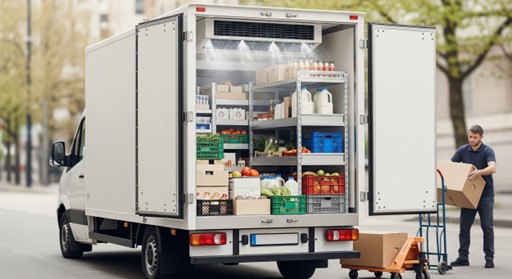
Cold handling is now a key component in making sure food reaches store shelves in a safe condition.
With increased customer expectations and product selections, temperature-sensitive transportation is becoming a factor in farm planning, retail planning, and even retail layout.
Modern supply chains need to be carefully managed with cooling systems that allow the preservation of quality while maintaining flexibility and speed at the same time.
This change is already evident in the early phases of distribution. Producers are increasingly reliant on chilled food delivery services to deliver items rapidly after harvest or processing, lowering spoilage risks and retaining texture.
Without effective thermal control at this stage, subsequent efficiency increases are worthless, as compromised products rarely recover once placed in undesirable conditions.
Preserving Quality From Source to Store
Rapid transport is not the only factor that determines freshness. Consistent cooling preserves taste and nutritional value by slowing chemical change and bacterial development.
Dairy, seafood, prepared meals, and fresh produce all respond differently to temperature changes, which means precision is necessary rather than discretionary.
When proper cooling is implemented right away, producers benefit from longer shelf life.
Smaller suppliers are able to reach domestic or foreign buyers thanks to the additional time, which allows for wider distribution.
Retailers are ultimately reassured that goods will be delivered in a marketable state, cutting down on waste and safeguarding the reputation of the brand.
Supporting Diverse Product Categories
Items in contemporary food ranges have widely different storage requirements.
Ready-to-eat salads, chilled meats, frozen sweets, and special dietary options all need to be handled carefully.
These days, transport fleets have multi-zone compartments that enable a variety of cargo to move together without sacrificing safety.
This flexibility allows merchants to increase selection while streamlining ordering. Businesses effectively combine cargoes rather than handling distinct shipments for each category.
This strategy respects stringent safety regulations while lowering transportation costs and environmental effect.
Strengthening Retail Operations
For efficient inventory management, retailers depend on consistent delivery timetables.
Just-in-time replenishment is supported by accurate chilled transport, which keeps shelves full without placing excessive orders.
Customer trust increases, and stock rotation is made easier when timing and temperature are in sync.
Shorter inspection time is also an advantage to store-level operations. Employees use more time assisting customers and less time checking compliance when deliveries are within specifications.
This reliability ultimately makes it easier to carry out more efficient processes across entire retail networks.
Enabling Regulatory Compliance
Regulations on food safety clearly hold all parties involved in distribution accountable. Routine audits now include temperature records, handling protocols, and traceability.
To fulfil these responsibilities, chilled logistics companies make significant investments in monitoring equipment.
Throughout transit, digital tracking technologies provide real-time visibility. If a problem does occur, quick identification avoids a larger interruption.
Producers and retailers obtain recorded confidence, which protects them during inspections and reinforces accountability across the supply chain.
Responding to Consumer Expectations
Consumers are calling for both quality and transparency. Freshness, origin, and handling have all gained attention, particularly for high-end or ethically sourced products.
In order to achieve these expectations, chilled logistics performs a crucial but unseen role.
With proper control of the cooling, products are delivered with the intended look and taste. Such experience affects buying choices and loyalty.
Conversely, although safety may be technically excellent, apparent degradation easily destroys confidence.
Driving Innovation Across Supply Networks
Chilled transport is still changing as a result of developments in insulation, sensor technology, and route planning.
While data analysis finds inefficiencies before they escalate, smarter cars automatically modify conditions according to the type of cargo.
These advancements promote cooperation among manufacturers, logistics companies, and retailers.
Better forecasting, less waste, and increased resilience during seasonal demand fluctuations or unforeseen disruptions are all results of sharing knowledge.
Building Resilient Food Systems
The modern food supply networks are under pressure due to global sourcing, changes in consumption patterns and climate variability.
Chilled logistics gives stability in the face of chaos. This helps companies to adapt without affecting the quality or safety of their products by protecting commodities during transportation.
The use of temperature-controlled transit will also remain central as the food networks will become more integrated.
In addition to delivery, it affects the preparation of food, its sale, and the confidence people have in it in their everyday lives.









Recent Comments