






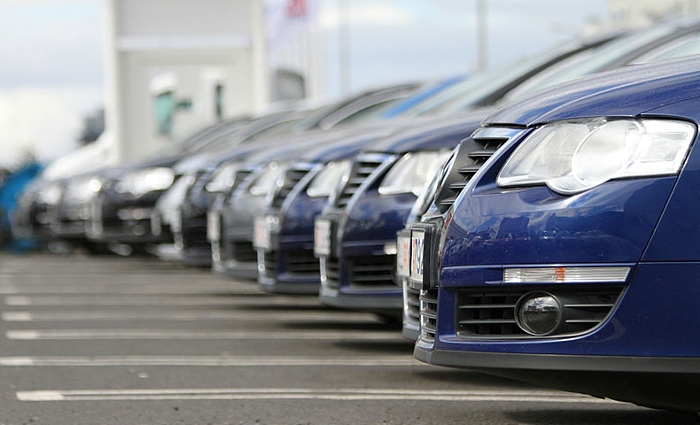
James Hargreaves coordinates about 35 delivery vans out of a depot near Bristol, routes running across the South West and up into the Midlands.
Every one of those vans had been feeding telematics data into a cloud dashboard for two years, and nobody in the company had looked at it once.
The trackers went in for theft prevention. No vehicles had gone missing in two years, so the dashboard just sat there.
Hargreaves had to ring the telematics provider to get his login credentials reset because the original ones had been written on a sticky note that somebody threw away during an office clearout.
He only opened the thing at all because his insurance broker had been on to him about it for weeks, after another client of the broker’s apparently shaved 15 to 20% off their renewal premium by handing over driving behaviour data at the meeting.
Hargreaves exported the CSV, the broker formatted it, and the insurer cut the renewal quote by 18% without much of a conversation about it.
Hargreaves’s broker told me he’d been trying to get fleet clients to pull their telematics data for over a year, and Hargreaves was one of maybe four or five who’d actually done it.
Most of them keep saying they’ll get to it. The broker charges nothing extra for bringing the data into a renewal meeting and reckons the average discount across the clients who have done it sits somewhere around 14 to 20%, though the sample is small.
Underwriters will take 10 to 15% off just for having telematics fitted. If the fleet can show 12 months of clean driving records on top of that, the discount at renewal goes past 25%.
The ABI reported £11.7 billion in motor claims, up 17% on the year before. Renewal premiums for commercial fleets climbed worse than anything else because the average claim size on a fleet vehicle runs well above what a private car costs to settle.
Brokers I’ve spoken to reckon fewer than a third of their fleet clients have ever formatted their telematics data into something an underwriter could read.
Four months after the insurance renewal, Hargreaves’s company bid on a last-mile delivery contract for a large retailer with distribution centres in the West Midlands.
Hargreaves attached the telematics summary as an appendix because he’d already formatted it for the insurer, and it took about five minutes to repackage.
Fuel consumption by route, idle time, geofence-derived delivery accuracy, and speeding incidents per 10,000 miles.
His fleet was running three or four incidents per 10,000 miles. The procurement team called him back specifically about the appendix. That doesn’t normally happen with supplementary material on a last-mile tender.
A fleet management specialist at gpswox.com told me that historical vehicle tracking records keep showing up in UK tender submissions, and that operators who attach them tend to get the contract even when their quote is higher.
Hargreaves got the contract. The retailer’s logistics director mentioned afterward that documentation of reliability scored higher than price in their evaluation.
You don’t hear that said out loud often in UK logistics procurement, even though I suspect it’s true more often than anyone admits.
Last-mile tenders in this market run tight, maybe 3 to 6% separating the cheapest from the most expensive, and I’ve seen bids where the price difference between first and second place was under £4,000 on a contract worth well over £200,000 annually.
The Procurement Act 2023, which came into force in February 2025, expanded the criteria that public sector buyers can apply beyond cost, and procurement teams I’ve spoken to say they’re already using operational data as a scoring factor on transport contracts.
One procurement officer at a local authority in the East Midlands told me she’d started asking for telematics summaries by default. She said maybe half the bidders had them.
A fleet operator in Manchester was cycling out a dozen vans last year, all around 120,000 miles.
The average British fleet turns vehicles over after about 3.9 years, fast compared to most of Europe, where 5.7 years is closer to normal.
There’s a lot of ex-fleet stock moving through the UK market at any given time, and buyers know it.
He pulled the full telematics history for each van and listed them with the data files attached, speeds, braking events, idle hours.
A few of them went for 8 to 12% above what undocumented vans of similar age and mileage were fetching, and the rest moved quicker than he expected, though two sat for nearly three weeks with no enquiries at all before both went within 48 hours of each other.
One buyer, a small courier outfit, called specifically asking whether the vans had been hammered on motorway routes.
A dealer in Birmingham put the typical premium for a van with full telematics records at 5 to 10% over an identical vehicle with nothing on file.
The data had been generating itself for two years without Hargreaves or anyone else in his company checking it.
The theft prevention value turned out to be zero because nothing was ever stolen.
I asked Hargreaves what he thought the total financial impact had been across the insurance discount, the contract, and whatever resale advantage they’d eventually get when they cycled out the vans, and he estimated somewhere around £35,000 to £50,000 over 30 months.
Vehicle tracking costs on 35 vehicles run maybe £700 to £1,000 a month, so roughly £25,000 over that period.
One telematics provider in the UK alone is now tracking over 333,000 vehicles and reporting 98% customer retention.
The operators who format their records and bring them into meetings probably make up 20 to 25% of the market.
Underwriters are starting to ask for the data before the fleet manager thinks to offer it.









Recent Comments