






Across the UK, the green industrial revolution is taking root in town halls, high streets, and community rooms where neighbours plan a greener future.
This movement goes beyond cutting carbon. It is breathing new life into local economies, creating jobs, and giving residents a stake in their future.
From community-led wind projects to all-electric neighbourhoods, towns are proving that sustainability and prosperity can thrive together.
With the government committed to achieving net-zero emissions by 2050, towns are playing a pivotal role in turning that national target into everyday reality.
From local vision to lasting change
In places like Lewes, East Sussex, councils are re-wiring their economies around sustainable growth.
They are investing in home retrofits, switching to green transport for public services, and keeping more spending in the hands of local businesses.
It is a practical approach to build resilience and keep economic benefits close to home.
Similar stories are emerging elsewhere. Oldham’s solar-powered schools and hydroelectric schemes are cutting bills while funding further green projects.
These initiatives show that the eco-economy is not just a policy on paper but a set of real tools that can improve everyday life.
Government policy is reinforcing this momentum. Under a new community-benefit requirement for renewable projects, developers of large-scale clean energy infrastructure must contribute to funds that support training programmes, infrastructure improvements, and green innovation hubs, ensuring local residents share in the rewards.
Smart energy towns leading the way
One of the most ambitious examples is Otterpool Park in Kent, planned as Britain’s first all-electric town.
Every home will have rooftop solar panels linked to shared battery storage, forming a virtual power plant that can even sell energy back to the grid.
It is the kind of forward-thinking design that could become a blueprint for other towns, showing how clean energy can lower costs and boost independence.
Elsewhere, smaller communities are proving scale is not everything. In Cornwall, the Wadebridge Renewable Energy Network is helping the town meet much of its power needs through solar and wind.
In Brighton, a local co-operative has raised funds to install solar systems on schools and small businesses, with profits going straight back into environmental grants.
Renewables, resilience, and community spirit
What makes these projects powerful is not just the technology, it is the sense of ownership they create.
Community-run schemes put decision-making in local hands, ensuring the benefits are shared fairly.
They also diversify local economies, making towns less vulnerable to national or global economic shocks.
Sometimes, eco-momentum comes in modest, neighbourhood-building forms.
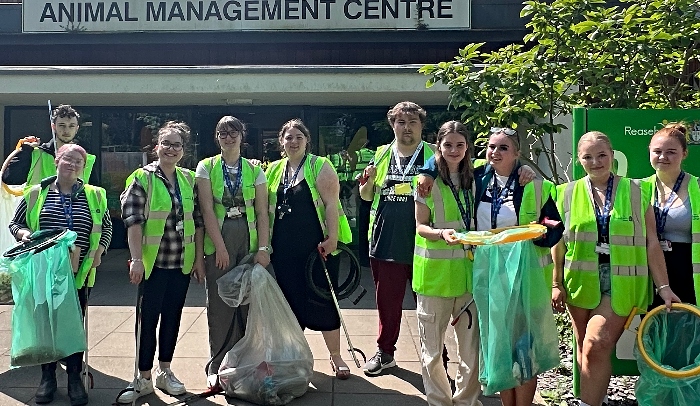
Recently, Nantwich residents teamed up for an eco-Sunday clean-up along the River Weaver, combining nature restoration with community spirit.
It’s small-scale action that echoes bigger ambitions for greener towns.
It serves as a reminder that the Green Boom is not solely about landmark infrastructure projects, but also about small, visible wins that residents can take part in.
While national policy can set the stage, it is local action that gives the Green Boom its heart and character.
Sustained investment in community energy grants, clean power plans, and skills training will ensure that towns are not just passive recipients of green policy but active architects of a more resilient and sustainable future.
A future built on ideas and action
The eco‑economy is not driven by regulation alone. It’s powered by storytelling, education, and innovation.
To make sense of where green economics meets everyday choices, it is worth taking the time to listen to Dharshini David speak.
Her work, including Environomics, blends economics, environmental insight, and accessible narrative, helping lay insights into how the shift to sustainability rethreads daily life and markets alike.
Platforms like PepTalk are amplifying voices like hers, injecting clarity and impetus into local and national discussions about how towns can harness every economic benefit from the green boom.
The momentum is real. Whether through bold projects like Otterpool Park or grassroots efforts to green a single street, towns are showing that sustainability can be a powerful driver of prosperity.
If the UK can keep empowering communities, the Green Boom could become not just a climate solution but a new foundation for thriving local economies.









Recent Comments