






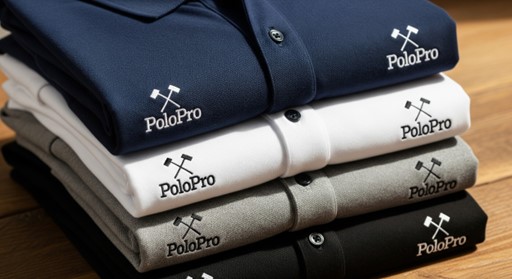
Maintaining a professional image for employees frequently feels like a balancing act between budget control and presentation.
Most companies are of the opinion that a decent visual identity comes at a high cost, but this notion seldom stands to scrutiny.
By planning, making wise purchases and understanding how clothes wear out, one can have a high-end look without exhausting resources.
Uniform decisions have an impact on client trust, internal pride and first impressions.
Intentional clothes are a sign of order and reliability even before a conversation begins. By making prudent choices, you can achieve that aim and have planned and predictable expenditure.
Cost Control Through Smarter Purchasing
Purchasing specific products on demand frequently leads to inconsistent aesthetics and increased pricing.
A sensible substitute is group buying. When new employees join, bulk options simplify replacement ordering and lower the cost per item.
Polo shirt bundles present a reliable method of saving money without affecting visual consistency to many companies in this budget planning phase.
Moreover, bundled options enable the projection of costs, which is beneficial in long-term financial planning among departments.
Start With Purpose Rather Than Style
When function is prioritised over trends, uniform planning performs best. Teams work in a variety of settings, including offices, retail spaces, warehouses, and mobile positions.
Clothing must meet various requirements depending on the environment, such as breathability, mobility, and wear resistance.
Clearly defined goals avoid needless frills. Purchasing decisions are guided by a brief list of requirements, such as ease of laundering, comfort during extended shifts, and uniform colour appearance among batches.
When practicality takes the lead, style follows naturally.
Why Polos Deliver Strong Value
A well-made polo is one of the few pieces of clothing that successfully strikes a balance between presentation and adaptability.
Soft fabrics keep users comfortable for long periods of time, and structured collars enhance casual situations.
Polos are appropriate for both internal teams and customer-facing positions because of this balance.
Initial cost is not as important as durability. Garment longevity is increased with superior stitching, color-fast dyes, and reinforced seams.
Even if the initial cost seems a little higher, replacing products less frequently lowers overall spending.
Fabric Choices That Reduce Long-Term Spend
A key factor in cost effectiveness is the choice of materials. While synthetic fibres provide resilience and shape retention, cotton-rich blends provide breathability.
In busy work settings, combined materials frequently perform better than single-fibre clothing.
Easy-care fabrics require less upkeep. Replacing clothing is less frequently needed when it can tolerate frequent washings without fading or shrinking.
Staff also benefit from simplified care protocols, which promote regular wear and presentation.
Branding Without Excess Expense
Heavy branding is not necessary for a professional appearance. Subtle logo placement ensures identification and keeps production costs low.
High-quality printing techniques or smaller embroidery sections offer clarity without overwhelming the clothing.
Brand identification is reinforced by uniform colour consistency just as well as by bold logos.
Choosing a limited palette makes ordering easier and guarantees that new products complement current inventory.
Placement and Scale Considerations
Sleeve details can provide distinctiveness without taking over the design, although chest positioning is still a popular option for visibility.
Careful scaling maintains clarity over time and avoids distortion after repeated washing.
Fit and Comfort Influence Perceived Quality
Even the greatest materials are undermined by poorly designed uniforms. By providing a variety of sizes, team members are certain to feel at ease and confident.
Comfort has a direct impact on posture and movement, which has a subtle impact on the perception of professionalism.
During size trials, including staff input reduces errors and boosts satisfaction. Uniforms are worn with pride rather than duty when workers feel valued.
Planning for Growth and Change
Future expansion should be factored into uniform planning. Selecting vendors with consistent stock availability helps avoid outdated styles or mismatched hues.
Maintaining consistency over time prevents expensive redesigns and safeguards brand image.
Seasonal additions like layers or short-sleeve options can be used to stretch the usability without a complete replacement cycle.
Flexibility ensures that expenditures are kept under control as it adjusts to the changing circumstances.
A Professional Image Built on Smart Decisions
Spending a lot of money is not necessary to create a unified team appearance. Long-lasting value is produced via careful consideration of purpose, fabric, fit, and purchasing strategies.
Professionalism comes easily when apparel promotes durability and comfort.
Businesses that focus on intelligent uniform strategy develop a dependable visual brand while remaining financially disciplined.
The outcome demonstrates organisation, purpose, and consideration for both personnel and finances.








Recent Comments