






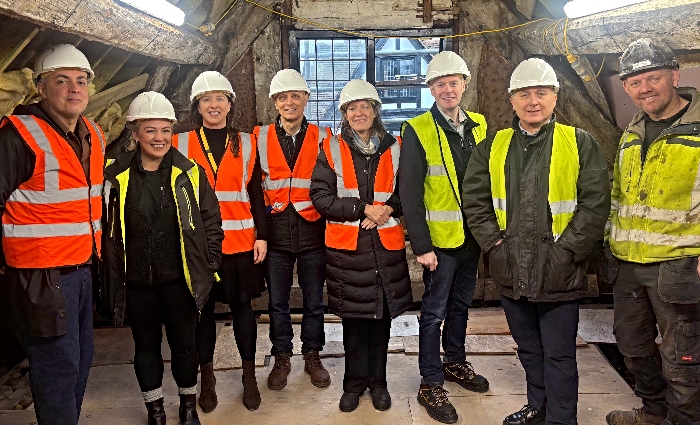
A major conservation project has marked a significant milestone in the restoration of a 16th‑century listed building in Nantwich.
It follows more than a year of complex heritage works on the Cancer Research shop on High Street in Nantwich.
The building, originally constructed as a dual dwelling and featuring a shared party wall, had suffered from long‑standing dilapidation dating back to the 1980s and 90s.
Engineers uncovered historic plumbing works that needed careful reassessment.
A formal party wall was built, with works extending into the neighbouring property to address key repairs.
More than £250,000 has had to be diverted from the Cancer Research organisation’s primary activities to pay for the restoration.
Nigel Wighton, Cancer Research UK Property Manager, said: “Cancer Research UK is delighted to be nearing the completion phase of this complex restoration project for such a beautiful grade II building.
“After almost two years on site, it’s been an incredibly challenging project.
“Backed by a great team which was led by Project Surveyor Ian Whiteside FRICS FCABE and all at UK Restoration Services, we look forward to reopening this wonderful shop for the community of Nantwich for many years to come and raising essential funds for Cancer Research UK.”
Works began in February last year and have involved collaboration with heritage specialists and conservation officers.
Anna Burton, Nantwich Town councillor, was given a tour of the renovation works with Jeff Stubbs of Nantwich Civic Society.
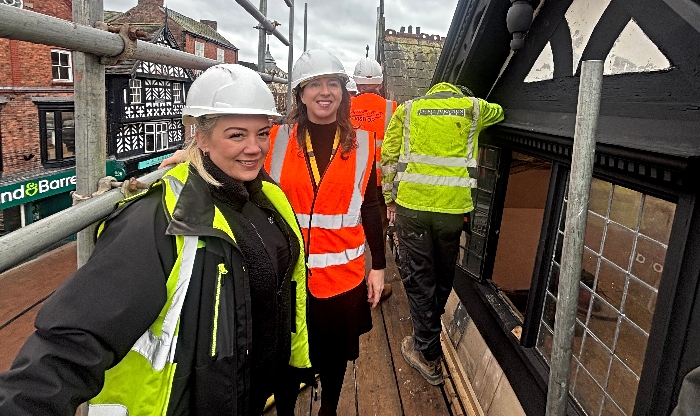
She said: “The Nantwich community will be very happy that this community building has been restored to its original state using traditional methods.
“The people of Nantwich owe a lot to Cancer Research for their commitment to restoring this building for us to enjoy for hundreds of years to come.
“We all look forward to the scaffolding coming down in the summer this year, all being well.
“I was glad to have helped in my own small way to get this project moving and personally have learnt a lot about traditional restoration. It’s been fascinating.”
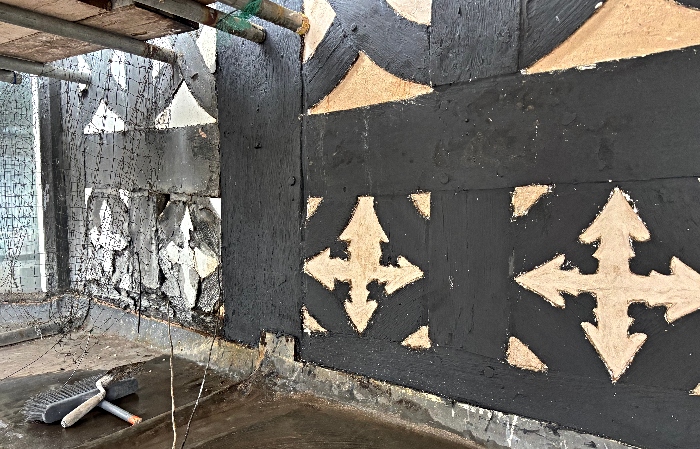
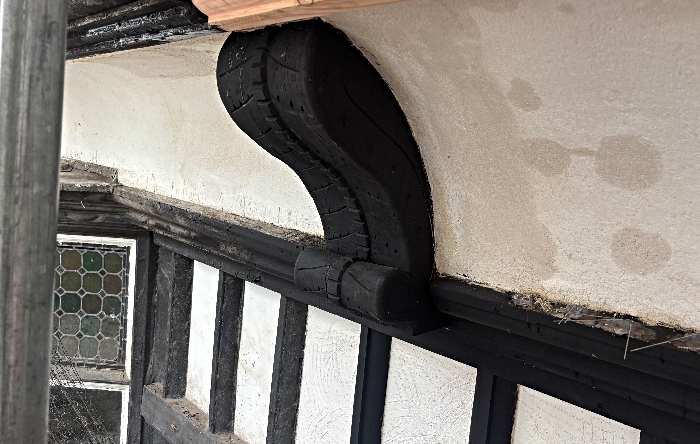
Traditional materials were used throughout the restoration, including goat hair lime plaster, linseed-based paint, tar, and oak.
 All materials were tested to meet modern safety standards while respecting historic methods.
Kelly Hunter, contracts coordinator, said: “This has been a challenging journey with many twists and turns.
“Maintaining the authenticity of such a historic building has been complex, but we’re looking forward to seeing the end results, the scaffolding coming down, and the town being able to appreciate it once again.”
Scaffolding is due to be removed soon as the charity prepares to reopen the building to the public.
The organisation will be inviting people and new volunteers into the new-look building by holding coffee mornings and seasonal events.









MarkH I take you don’t understand commercial leases will be full repairing leases these days, there will be no other option, it is a business expense Just because they are a charity, it doesn’t mean everything has to be given to them for free
Charity shops aren’t just a cost, they’re a key income generator. Keeping them in good condition helps protect and maximise the funds that ultimately go toward cancer research. A poorly maintained shop is less likely to attract customers, volunteers, or donations, which directly impacts income. Most Cancer Research shops are leased rather than owned, meaning they’re usually subject to full repairing obligations. In cases like this, particularly with older, timber-framed buildings, repairs aren’t optional. If issues are left unaddressed, deterioration can escalate into significant structural problems, which are far more disruptive and costly to remedy later. So this isn’t really about diverting funds away from the cause, it’s about meeting legal obligations and managing assets responsibly to avoid greater costs and protect long-term income for the charity.
Very happy to see old buildings being restored!
Fantastic news such an old historic building being repaired. Well done to Cancer research also for paying for the restoration.
But Ronx, do you think that 25,000 people who gave £10 to Cancer Research would be happy that their money was spent repairing a charity shop and not on cancer research? This is why charities should lease and not own property – to many people it is not where charity funds should be spent – unless you’re the National Trust.