






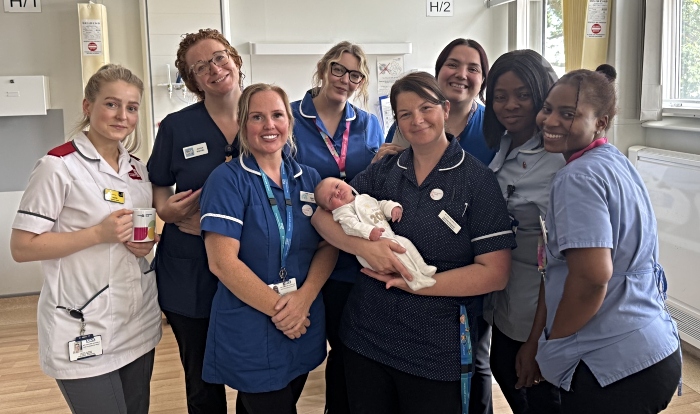
More than 1,000 families in Cheshire have now taken part in a pioneering study with babies born at Leighton Hospital screened for more than 200 rare genetic conditions.
Mid Cheshire Hospitals joined the UK-wide Generation Study, led by Genomics England in partnership with NHS England, which involves offering whole genome sequencing to identify treatable, rare genetic conditions in newborns.
At its maternity unit, expectant parents are told about the research programme during pregnancy and they decide if they would like to take part.
The Trust joined the study in September 2025 and less than nine months later is celebrating reaching a major recruitment milestone.
Caroline Dixon, senior research team lead Midwifery at Mid Cheshire Hospitals, said: “We’re incredibly proud to have worked with such a significant number of families.
“Having 1,000 participants is a fantastic achievement for our team and reflects the willingness of local people to support research that could transform care for future generations.
“This study is hugely important, and our Trust is committed to supporting parents every step of the way, ensuring they have the information they need to make an informed decision about taking part.”
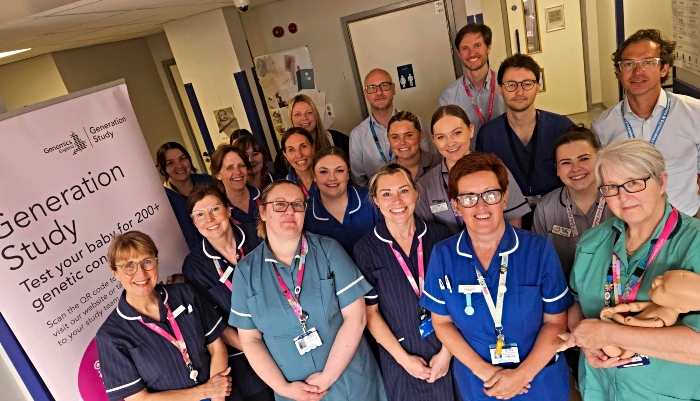
The Generation Study has been described as one of the world’s largest research studies of its kind, with the aim of screening 100,000 newborns in England.
Shortly after birth, a member of staff confirms with the parents that they are still happy for their baby to be tested.
A blood sample is then taken – usually from the baby’s umbilical cord – and sent for whole genome sequencing.
Results are then reviewed before being returned to parents.
If a newborn baby is identified as having a genetic change associated with a treatable childhood condition, families are offered further NHS testing to confirm a diagnosis, alongside ongoing support and treatment.
Jaime Halvorsen, director of research and development at Mid Cheshire Hospitals, said: “The success of this project at our maternity unit highlights our ambition to make research part of everyday care across the Trust, bringing the very latest advances directly to our patients.
“By taking part, families are enabling earlier diagnosis, faster access to treatment, and better outcomes for children, while also helping to shape the future of NHS care.”
It is hoped the study will enable hundreds of patients across the country to benefit from earlier diagnosis and treatment that could help slow disease progression and improve, or even extend, their lives.
Without testing, symptoms of rare conditions may only appear later in childhood. Earlier diagnosis means families can access the right support much sooner.
Dr Rich Scott, Chief Executive Officer of Genomics England, said: “We believe genomics can transform healthcare in this country and be used to get ahead of serious illness.
“It’s been incredibly moving to see the lifechanging impact the Generation Study is having for families.
“Every year thousands of babies are born in the UK with rare genetic conditions, but they can be hard to diagnose.
“On average, it takes around five years for a rare condition to be diagnosed, at which point it has often progressed to the point where treatment, if it exists, is far less effective.”








Recent Comments