







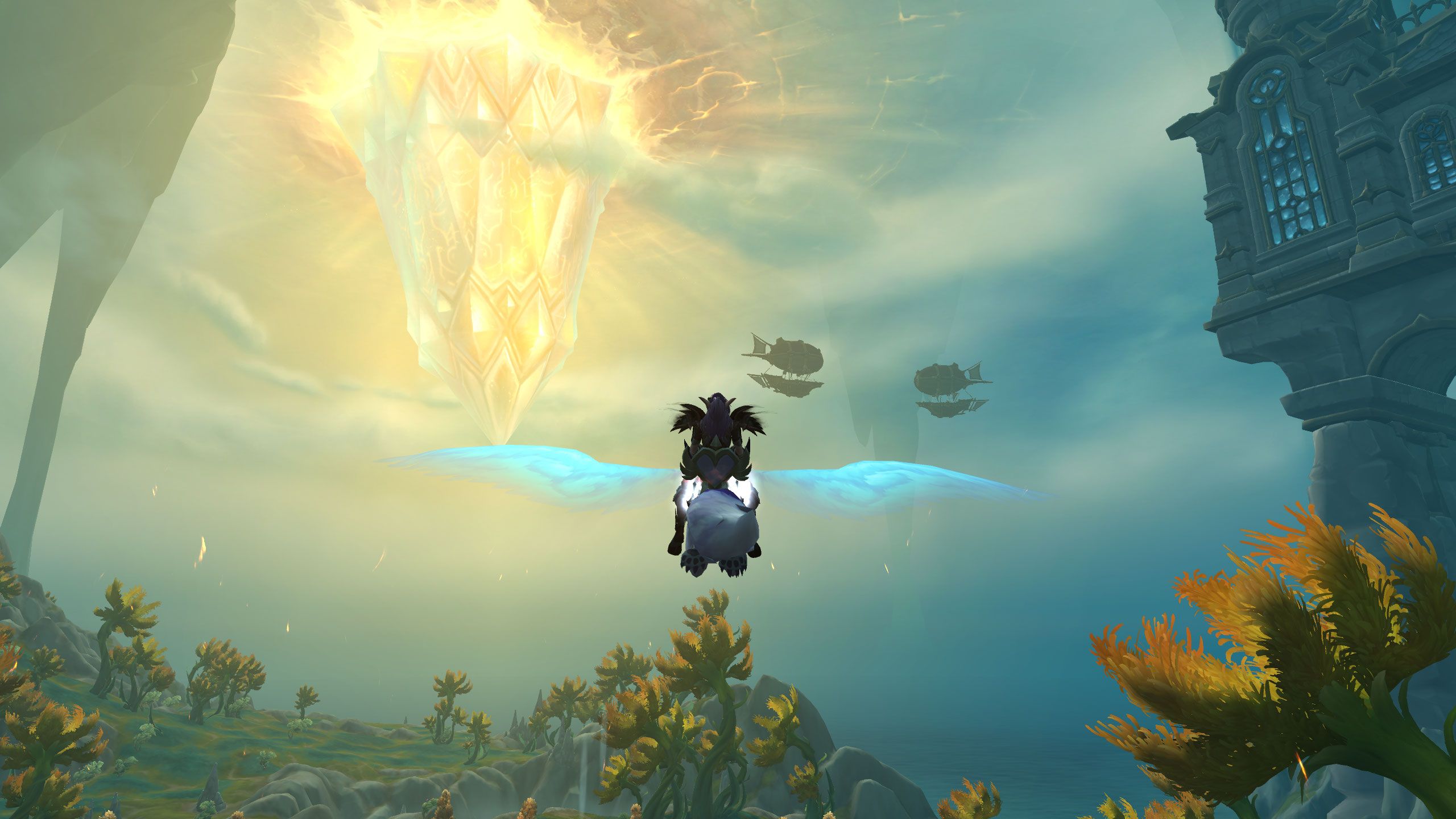
Search “why WoW is still popular,” and you will see that the same three answers come up every time: good raids, regular updates, a loyal fanbase.
Those answers are not wrong. However, they only tell part of the story. WoW specifically outlasted a decade of competitors that copied its formula almost exactly, several of which had bigger budgets and cleaner launches.
Let us look past the usual talking points and dig into the mechanics most players never notice.
Some of these factors have little to do with combat or content at all, and more to do with how deeply players end up invested in their own account over time.
The Numbers Are Messier Than People Assume
Blizzard no longer releases specific subscriber numbers after 2015. Thus, all numbers since then are estimates.
Some analyses place the number in the low millions. Others considerably higher. The precise number is not as important as the trend.
The number of players usually has a regular cycle: a peak at the release, a decline in the middle of the patch, and a rise when new content is released.
At the beginning of that cycle, both gear and mastery are behind ambition. This is precisely the time when most players resort to a WoW carry rather than solo grinding.
That convenience is a minor, frequently ignored factor that WoW continues to gain traction even during turbulent times, instead of losing players to frustration.
The Real Lock-In Is Not Just Gameplay
Here is the angle most retention articles skip entirely. One of the biggest reasons that has been cited as to why WoW has remained is simple.
To quit is to abandon 15 to 20 years of development, collections, and relationships within it. That is not the same type of retention as the raids are fun.
This is a trend that economists refer to as switching costs. It explains the investment that has been built up to make it costly to leave a service.
A WoW account contains mounts, achievements, guild history, and years of social connections that cannot be transferred elsewhere.
A lot of players who take a break are likely to come back at some point, usually when a new expansion opens the door.
Twenty Years of Worldbuilding Nobody Else Has
Lore continuity is a larger factor in retention than most players would credit it.
The story of Azeroth has been going on since 2004, and the characters and places have a weight to them.
Even the finest writing in a brand-new MMO cannot create that sort of history, even at the time of its release.
This produces a weird effect. Even those players who do not pay attention to the story still enjoy it indirectly.
Zones, music, and character cameos have emotional resonance with veterans that a newcomer cannot experience yet.
That weight is part of what makes long-time players remain attached, even in weaker content patches.
The Addon Ecosystem Blizzard Never Had to Build Itself
One of the most underrated factors in WoW’s longevity is the addon API.
It allows the community to create its own tools at no cost. The player-created addons provided damage meters, boss mod warnings, and interface customization.
This essentially provided WoW with years of free feature development that ran alongside official patches.
Games that lock down their interface feel dated faster, since players cannot fix small annoyances themselves.
WoW allowed players to recreate much of the interface at their own discretion.
That flexibility made the game feel up to date, even when fundamental systems remained largely the same over the years.
A Formula Built for More Than One Kind of Player
The content structure of WoW allows vastly different play styles with a single subscription.
One can raid, gather mounts, level alts, or even spend all their time at the auction house.
Not many rivals provide such space to various definitions of fun in a single game.
A recurring theme over the past few years is that Blizzard is ready to course-correct following weaker expansions.
Both class balance and content pacing are adjusted according to player feedback.
The fact that it is responsive is as important as any one feature, as it is an indicator that the game is actively supported.
Competition Never Actually Killed It
Every few years, a new MMO gets labeled a “WoW killer” by the gaming press.
None of them has unseated it so far. This is mostly historical background rather than the core explanation.
WoW’s survival was never really about lacking competition in the first place.
It survived because switching games means giving up years of accumulated progress and social ties. Few competitors can offer a genuine substitute for that kind of history.
Polished combat on release day rarely outweighs what a player would lose by leaving.
Staying Power Built From Several Small Advantages
No single feature explains why WoW has lasted this long.
It is the combination of accumulated player investment, deep lore continuity, a community-built addon ecosystem, and a content loop flexible enough for different playstyles.
Each piece alone would not sustain a run this long.
Together, they created a game that is difficult to walk away from. It is also hard for competitors to copy completely.
That combination, more than any single raid tier or expansion, is what keeps millions of players logging back in year after year.








Recent Comments