






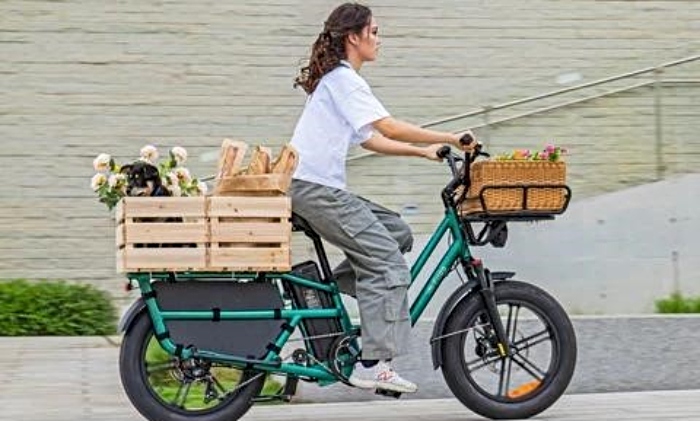
Electric bikes are no longer just a trend – they’re a revolution. They’re changing how we move, how we live, and how we connect with our cities.
But as people switch from cars to electric bikes for everyday errands, one particular type of e-bike is standing out: the electric cargo bike.
Whether you’re a busy parent, a small business owner, or just someone who wants a greener way to get around, an electric cargo bike could be exactly what you need.
This guide is here to help you decide if it’s right for you, and if so, how to choose the best one.
What Is an Electric Cargo Bike – And Is It Right for Me?
Let’s start with the basics. A cargo bike is a bicycle built to carry more than just you—like groceries, gear, kids, or even tools for work.
When you add an electric motor to that setup, it becomes an electric cargo bike—the ultimate car alternative for many people.
Who uses them?
● Parents who want to cycle with kids instead of driving
● Delivery riders for local businesses or apps
● Tradespeople who carry gear and tools to job sites
● Dog owners who want to bring their furry friends along
● Anyone who’s tired of spending on fuel, sitting in traffic, or struggling to park
Real-world use cases:
● School drop-offs with two kids in the front box
● Grocery shopping with panniers full of fresh produce
● Local deliveries for cafés, florists, or bakeries
● Cycling to the beach with chairs, bags, and coolers
If you’re someone who needs space but still wants the freedom of two wheels, an electric cargo bike is made for you.
Why Electric? What Makes It Different from a Regular Cargo Bike?
Cargo bikes have been around for a long time.
In fact, they’re still used in many parts of the world for daily tasks. But add a motor and everything changes.
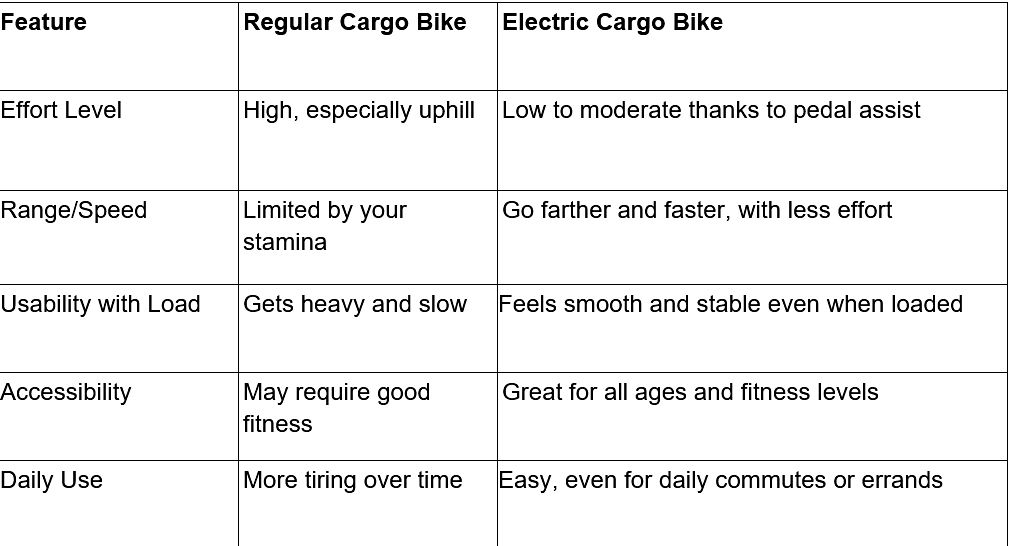
For most people who plan to ride regularly with a load, an electric cargo bike simply makes more sense.
The Main Types of Electric Cargo Bikes
There are several styles of electric cargo bikes.
Choosing the right one starts with knowing the difference between them.
a. Longtail Cargo Bikes
These have an extended rear rack that carries cargo or seats for kids. They ride like a normal bike but can carry a lot.
● Great for families or urban riders
● More compact than other cargo bikes
● Easier to store and handle
b. Front-Loader Cargo Bikes (Bakfiets)
These bikes have a big box in front of the rider. You steer using a long handlebar that connects to the front wheel.
● Good for carrying kids or large loads
● Comfortable and stable
● Takes a little time to get used to steering
c. Cargo Trikes
These three-wheel bikes come with a large box or flatbed, often in front or at the back.
● Super stable, especially at low speeds
● Ideal for heavier loads or business use
● Slower and takes more space on the road
Tip: Think about what you’ll carry most often—kids, shopping, deliveries? That helps narrow down the style.
4. Key Features to Consider Before Buying
Now let’s break down the most important factors to think about before choosing your electric cargo bike.
a. Motor Power & Battery Range
You’re going to carry extra weight.
So, you need an e-bike with a powerful motor and reliable battery.
● Motor: Look for at least 250W, but 500W or more is better for hills or heavy loads.
● Torque: Higher torque (40–85 Nm) means better pulling power – especially from a standstill.
● Battery range: Aim for 40–80 km (25–50 miles) per charge depending on how far you ride daily.
● Dual battery options: Some models allow you to carry a second battery for longer trips.
b. Weight Capacity
Cargo bikes vary in how much weight they can carry.
Some support up to 200–250 kg (440–550 lbs), including the rider.
● Make sure the cargo weight limit suits your needs.
● Don’t forget to account for the rider’s weight in total load capacity.
c. Safety for Kids and Passengers
If you’re carrying children, your bike should have proper safety features:
● Harnesses or seat belts
● High sides on the cargo area
● Weather covers or canopies
● Footrests and handrails
● Soft seats or cushions
d. Frame Type & Geometry
A step-through frame is easier to mount and safer for quick stops.
Some cargo bikes have adjustable stems or seat posts to fit multiple riders.
Check:
● Comfort for long rides
● Upright riding posture
● Suspension for bumpy roads (front fork or seat post)
e. Brakes & Tyres
Cargo bikes are heavier—especially with full loads — so strong brakes are essential.
● Hydraulic disc brakes are the best. They stop fast and work well in wet weather.
● Wider puncture-resistant tyres offer more stability and comfort.
f. Gear System
Look for multiple gears. Even with electric assist, gears help you control the ride, especially on hilly terrain.
Some premium bikes use internal gear hubs (low maintenance), while others use derailleurs (more common, easier to fix).
A long-tail electric bike you can consider
The Fiido T2 2025 is a powerful longtail electric bike designed for heavy loads and everyday versatility – perfect for urban deliveries, family rides, or longer commutes.
Built with a strong aluminium alloy frame and an extended rear rack, it can carry up to 200kg in total (120kg on the main seat, 80kg on the rear rack), making it easy to transport passengers or cargo.
Equipped with CST 20×4.0-inch fat tires, the T2 offers excellent grip and stability on a variety of terrains.
The front oil-spring suspension with 60mm of travel helps smooth out rough roads, while the SHIMANO 7-speed drivetrain gives you flexibility in different riding conditions.
For confident stopping power, it features four-piston hydraulic disc brakes with a safety cut-off function.
With a pedal-assist range of up to 110km and a strong 60Nm torque motor, the Fiido T2 handles hills and heavy loads with ease.
Whether you’re hauling gear, kids, or just going the distance, this is a reliable, high-performance choice for anyone looking for a capable longtail e-bike.
Final Thoughts: Is an Electric Cargo Bike Worth It?
If you’re looking for freedom, flexibility, and a smart way to move around – yes, it’s absolutely worth it.
A good electric cargo bike replaces short car trips. It helps you stay active, save money, and lower your carbon footprint.
It’s a vehicle, a fitness tool, and a lifestyle shift all in one.
And once you ride it, you’ll wonder why you didn’t do it sooner.









Recent Comments