






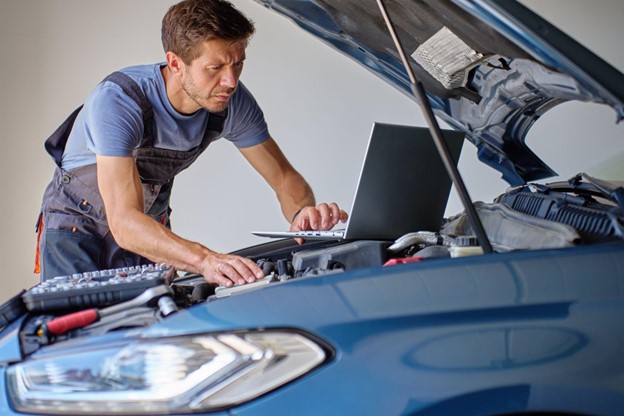
The timing belt synchronizes the movement of the engine’s camshaft and crankshaft; the valves need to open and close at the correct time in relation to the position of the pistons.
If the timing belt fails, it can cause internal engine damage.
Many vehicles have a water pump that is driven by the timing belt, so they are close together; if one fails, the other is at risk of failing as well.
Benefits of Replacing Them Both at Once
Cost Efficiency and Labour Time
Either the timing belt or the water pump cannot be accessed without removing additional engine covers and other parts; future repairs will take some time to complete.
Labour charges take up a huge chunk of general repairs and replacement. So, when getting both the parts looked after in a single visit, you are bound to save plenty of money on labour.
Moreover, this will save you another valuable resource—time. This way, you only need to spend a couple of hours every interval, instead of spending two days on home maintenance.
Preventative Maintenance to Save on Future Repairs
Any water pump will wear down over time; the bearings, seals, and impellers will all reduce in performance.
If you ever have the water pump repaired or replaced alone, it can become faulty and fail to operate.
If the pump seizes up, it can cause catastrophic failure, which will often lead to the failure of the timing belt too—the engine can fail if the timing belt snaps, and overheat if the water pump/cooling system fails.
Match Repair Intervals to Mileage and Reduce Parts Failure
Just like the timing belt, there will be a set replacement procedure for the water pump, usually between the same 60,000 and 100,000-mile marker (give or take); the water pump will not last hundreds of thousands of miles without needing replacement.
When the time is due, it’s best to switch the timing belt as well. That way you will not need to line up two different dates each time.
Sometimes, when mixing up different reminders, one of the parts could potentially break down without you realizing that repair was due.
When working with complicated mechanisms, it is a good rule of thumb to do full repairs at matching intervals.
Times When You May Not Need to Do This
If you have a water pump that isn’t driven by the timing belt (some are serpentine belt-driven or are driven off a different external drive), you may not need to have them both repaired or replaced at the same time, but more of a case of checking that the water pump is in good order—not leaking, noisy, or not turning, etc. Check out https://eccoparts.eu/en/138-water-pumps for ideal products.
In Summary
Is there any point in replacing the water pump when replacing the timing belt? For any vehicle with a timing belt that is driven by the water pump, yes.
It saves time, prevents engine damage, and remains good practice.
For spare part production, you can find this article very helpful on: eccoparts.eu/en/ for most of the European market.









Recent Comments