






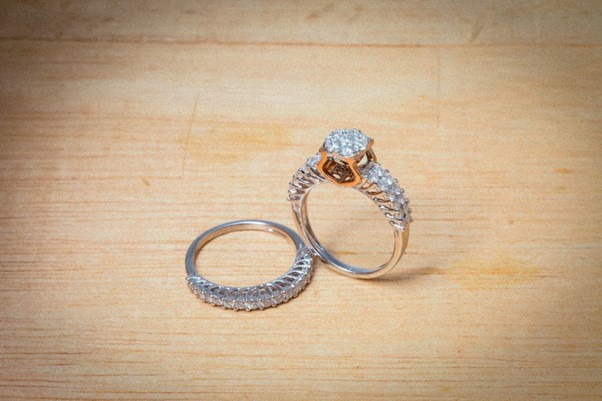
Choosing rings that sit together comfortably is more complex than it first appears.
Many couples focus on each ring in isolation, only to discover later that the combination does not work as intended.
At retailers such as Bercotts Jewellers, customers often seek guidance after realising their engagement ring and wedding band clash in subtle but important ways.
Understanding the most common mistakes helps avoid issues that affect appearance, comfort, and long-term wear.
Ignoring How Rings Sit Together
One of the most common oversights concerns how the two rings align on the finger.
Some engagement rings feature raised settings or extended stone mounts that prevent a wedding band from sitting flush.
When this happens, a visible gap appears between the rings. Over time, this space can feel awkward and disrupt the overall look.
Testing how rings sit together before purchasing avoids the need for later adjustments or compromises.
Overlooking Band Width Balance
Band width plays a significant role in visual harmony. Pairing a very slim engagement ring with a wide wedding band can make the set feel unbalanced.
The opposite can also be true: a bold engagement ring can overwhelm a delicate band.
Proportion matters. Rings that complement each other in width feel more cohesive and intentional.
Trying multiple band styles alongside the engagement ring helps identify combinations that feel balanced rather than mismatched.
Mixing Incompatible Metals
Metal choice affects both appearance and durability. While mixing metals can look striking, not all combinations wear well together.
Rings made of different hardness metals may rub against each other, leading to accelerated wear.
Colour contrast can also create unintended clashes. A warm-toned band paired with a cool-toned engagement ring may not always complement the setting or stone.
Considering metal compatibility early prevents wear issues and visual inconsistency later.
Forgetting Daily Comfort
Rings are worn every day, not just admired. Comfort should never be an afterthought.
Sharp edges, protruding settings, or bands that press into one another can irritate during normal movement.
When rings do not align properly, they may twist or pinch the skin.
Over time, this discomfort becomes noticeable. A well-paired set should feel smooth and secure without constant adjustment.
Prioritising Trend Over Longevity
Trends influence ring design, but not all styles age equally. Highly intricate bands or heavily contoured designs may look appealing now, but may be challenging to pair with future jewellery choices.
Wedding bands are meant to last decades. Choosing designs that balance personality with timeless structure supports long-term satisfaction.
Rings that rely heavily on current fashion may feel dated or impractical sooner than expected.
Neglecting Stone Protection
Engagement rings often feature prominent stones that require protection. Pairing a wedding band that presses against the stone’s setting can loosen prongs or cause gradual wear.
This is especially important with diamonds or other hard stones. Constant contact between rings increases the risk of damage.
Selecting bands designed to accommodate the engagement ring’s setting helps ensure the stone’s security.
Skipping Professional Advice
Many mistakes stem from making decisions without expert input. Jewellery professionals understand how different designs interact over time.
They can identify potential issues that are not immediately apparent. Consulting specialists provide access to experience gained from fitting countless ring combinations. This guidance often prevents costly alterations or replacements later.
Assuming One Size Fits All
Finger shape, knuckle size, and hand proportions vary widely. A pairing that looks perfect on display may feel completely different once worn. Assuming that a standard pairing will suit everyone leads to disappointment.
Trying rings on together, rather than separately, reveals how they behave during movement. This step helps ensure the set fits the wearer’s hand and style preferences.
Rushing The Decision
Engagement rings often evoke emotional excitement, which can lead to rushed decisions. Wedding bands selected later may not receive the same attention, creating an imbalance.
Taking time to consider the set as a whole leads to better results. Viewing the pairing as a single design rather than two separate purchases encourages thoughtful decisions.
Building A Set That Lasts
Pairing wedding and engagement rings successfully requires attention to detail, comfort, and long-term wear. Avoiding common mistakes helps create a set that feels natural and looks cohesive.
When rings sit comfortably, complement each other visually, and wear evenly over time, they become more than symbols.
They become part of daily life. With careful planning and professional guidance, couples can create ring pairings that remain as satisfying years later as they were on the first day.








Recent Comments