






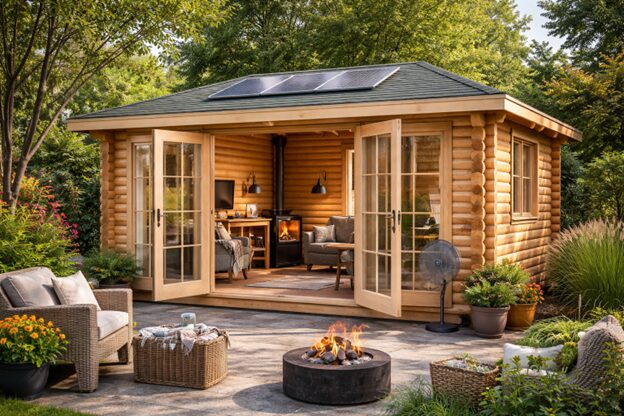
A log cabin is brilliant when it’s comfortable. When it isn’t, it becomes that “nice idea” you only use on the rare mild day.
In the UK, the same building can feel freezing in the morning, muggy by mid‑afternoon, and slightly damp if it’s been shut up for a week.
The fix isn’t one magic product — it’s a handful of boring-sounding basics done properly.
If you’re still deciding on styles and specs, Garden Buildings Direct is a useful place to get a feel for what’s out there.
The bit most people underestimate: the floor
Everyone talks about wall thickness. Fair. But the “cold feet” problem usually comes from below.
If the floor isn’t insulated well, you can crank a heater and still feel chilly because the room never really holds warmth.
The same goes for the roof: heat rises, so if the ceiling isn’t sorted, you’re basically paying to warm the sky.
Windows and doors are the other obvious weak spot. If you can feel a draft around the frame, you’ll notice it far more than you’ll notice an extra millimetre of timber on a wall panel.
Choose a cabin that’s built for all seasons
Before you even get to heaters or blinds, it helps to start with a solid base build.
Browsing different log cabins and their specifications (wall thickness, roof/floor options, glazing upgrades) can give you a clearer idea of what will actually stay comfortable in real UK weather — not just on a mild summer day.
Winter warmth: steady beats scorching
A common pattern is this: you pop out to the cabin, it’s cold, so you blast the heating.
Half an hour later it’s finally comfortable — and then you turn it off when you go back inside. Repeat daily.
That’s fine for the odd weekend session, but for regular use it’s much nicer (and often cheaper-feeling) to keep the temperature more even.
A simple timer can help. So can pre-warming the space for 20 minutes before you use it, rather than trying to “fight” the cold after you’re already sat there in a jumper.
Summer comfort: it’s basically shade and airflow
If your cabin gets sun on the front for hours, it will heat up. No getting around it. The easiest wins are:
● Shade the glass (even a blind makes a difference).
● Don’t trap hot air inside all day.
● Ventilate when the outside air is cooler (morning and late evening).
Also worth saying: laptops, monitors, chargers and printers throw out heat. In a small cabin, that adds up quicker than you’d think, especially if you’re on calls all day.
Turning it into a proper work space
If the cabin is going to be a daily workspace, it helps to compare it against a purpose-built garden office setup, because that’s the “baseline” for year‑round use.
Even if you don’t buy a garden office model, looking at those specs can tell you what matters in real life: insulation, glazing, and a build that’s designed to be used in all weather, not just in summer.









Recent Comments