






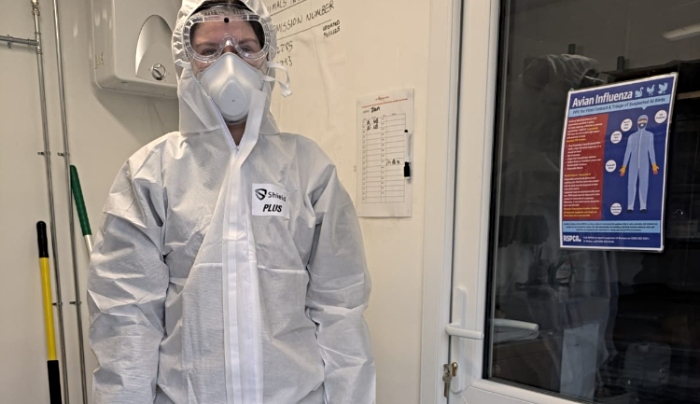
RSPCA Stapeley Grange Wildlife Centre in Nantwich has unveiled purpose-built isolation units to allow safer admission of high-risk birds amid the Avian Influenza crisis.
The units at the London Road centre have been two-years in the making.
Avian Flu can affect all birds and also scavenging mammals that feed on birds that may have died from the disease.
Staff at the wildlife centre have invested in cutting-edge biosecurity infrastructure with the new units including two triage units and four fully self-contained isolation cabins.
Designed to function as miniature hospitals, each cabin is equipped with independent ventilation, heating, and cooling systems to prevent airborne transmission of the disease.
Once a wild bird has been in rehabilitation for 14 days, it is legally reclassified as captive.
And a confirmed captive case, without appropriate isolation facilities, can trigger mandatory site-wide culling of all birds.
This legal threshold has forced centres to make heart-breaking decisions to refuse admissions of high-risk species to protect the rest of their patients.
Stapeley Grange’s new units are designed to mitigate this risk, allowing for a strict 14-day quarantine period in a bio-secure environment.
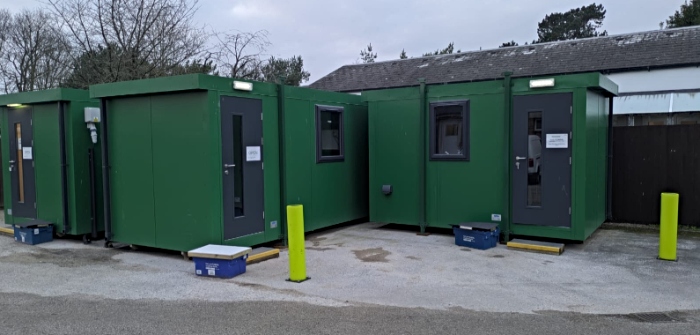
Lee Stewart, Centre Manager at Stapeley Grange, said: “The risk of a cull of our animals has been an ever-present concern, which is why we have had to adopt a strict minimal-risk approach to admissions.
“While the public often views the RSPCA as an emergency service for all animals, there have been cases where we simply could not help where the risk was too great and that has taken a real toll on the team.
“The reality is complex as admitting a single infected bird without perfect isolation could put every animal on site at risk and lead to long-term closure.
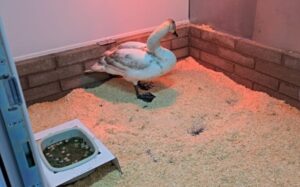
“With these new facilities, we can now admit species like swans, geese, and raptors safely and responsibly, without placing the wider site at risk.
“The facilities have been a game-changer for us and although space is limited in the new units we can now take in all species.”
The centre has also invested in the refurbishment of four 20-year-old mammal runs, to house a limited number of larger waterfowl species under bio-secure conditions.
Each unit includes dedicated changing areas so staff can provide care without re-entering shared spaces in contaminated clothing.
According to the Animal and Plant Health Agency (APHA) the UK recorded its highest-ever level of bird flu detections this winter, fuelled by a peak of 287 confirmed cases in December 2025 alone.
Lee added: “We have witnessed the fallout of confirmed cases at other UK wildlife centres which is why we have put so much time, effort and resources into building our new facilities.
“We are fine-tuning how our cabins work but the team are delighted to have them now.
“While originally designed to respond to Avian Flu and future disease outbreaks, the units have already demonstrated their wider value, having been successfully used for other urgent needs when Avian Flu measures were not required, such as during an influx of hedgehogs that placed the centre under pressure for space.”
Stapeley Grange Wildlife Centre is not open to the general public, except on open days, but welcomes visits from any wildlife rehabilitators.
To make contact and arrange a visit email [email protected]









Recent Comments