






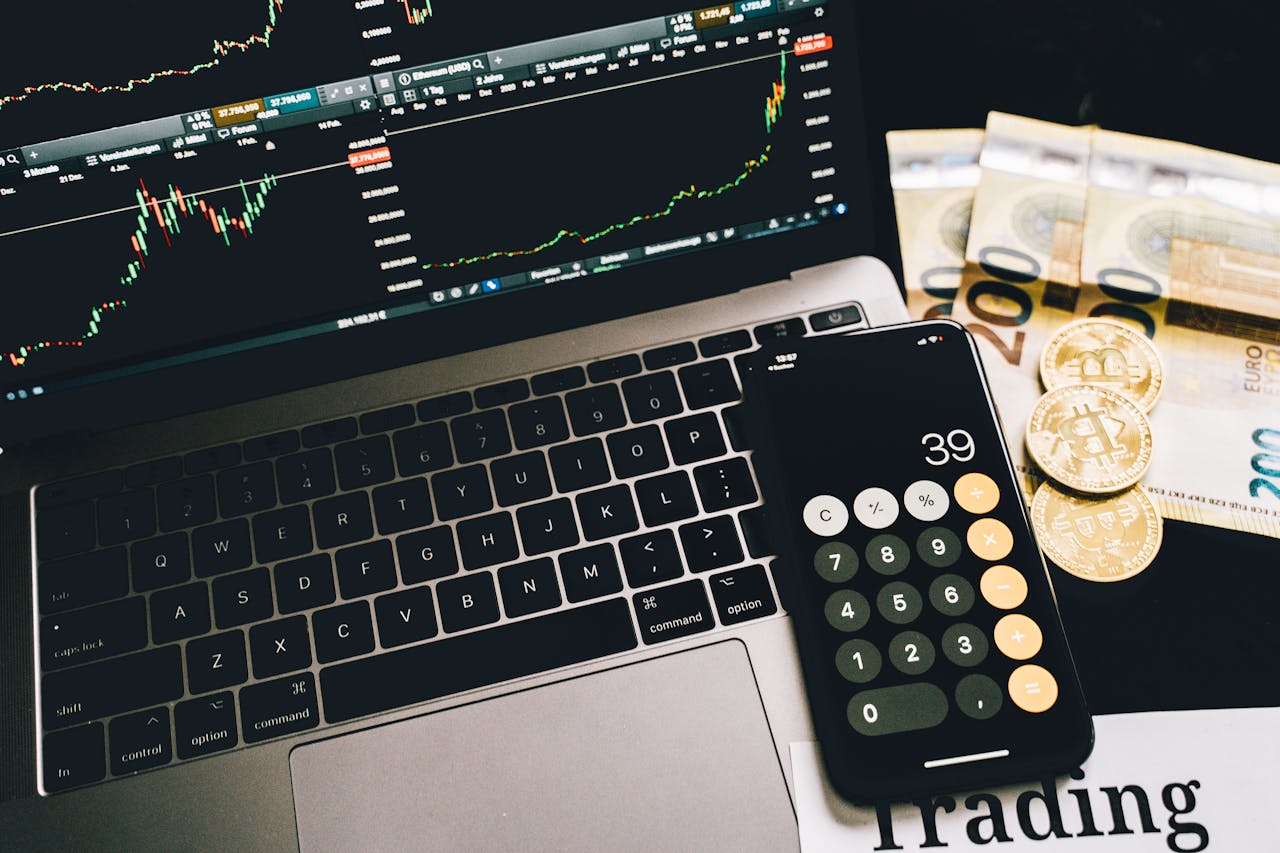
It’s easy to assume that trading is only accessible to people with large amounts of money.
Marketing headlines, screenshots of big profits, and stories of overnight success often reinforce that belief.
In reality, the question of starting capital is less about hitting a specific number and more about understanding risk, expectations, and how trading actually works.
This article looks at what capital means in practice, rather than what it’s often portrayed to be.
Why there is no single “minimum” amount to start trading
There is no universal minimum because capital requirements vary by market, instrument, and strategy.
Trading shares, forex, indices, or commodities all involve different position sizes and costs.
While brokers may advertise low minimum deposits, that figure usually reflects access, not what’s practical for managing risk.
Usable trading capital is the amount that allows you to size positions responsibly, absorb losses, and stay consistent.
A very small account can technically trade, but it often leaves little room for error or flexibility.
The relationship between capital and risk management
Capital and risk management are inseparable. Position sizing is always relative to account size, meaning smaller capital limits how much risk can be spread across trades.
When capital is tight, even small losses feel significant, increasing emotional pressure.
Protecting capital matters more than chasing returns, especially early on.
A well-managed small account can survive long enough to build experience, while a poorly managed larger account can disappear quickly.
Trading with small capital: what to expect
Starting with limited capital often shifts the focus from earning to learning. Returns are likely to be modest, and progress can feel slow.
This is where many traders struggle psychologically, leading to overtrading or excessive risk-taking in an attempt to “speed things up.”
Small capital environments are best used to develop discipline, execution, and emotional control.
Treating early stages as education rather than income generation helps set realistic expectations and reduces frustration.
How different trading styles affect capital needs
Trading style can create significant differences in starting capital requirements. Short term trading often means higher turnover and more commission leakage relative to account size.
This matters more in small accounts. Longer term trading takes more time but isn’t as sensitive to constant costs.
Margin can give you more exposure. It doesn’t reduce risk. Used indiscriminately margin will expand losses as easily as gains.
This is all the more reason to focus on protecting trading capital.
Trading tools and access for new traders
Having good trading platforms, charting applications, and execution tools is something traders of all sizes need.
Even small traders today get access to so many more platforms and tools than they did before.
Often, reference is given to something like an online trading platform when talking about providing traders access to tools and a means of trading the markets.
Setting a personal capital baseline
The only baselines that matter are personal, not industry standards.
Never trade with capital you cannot afford to lose. Emotional capital affects your judgement and outcomes in a major way.
More important than what you start with is how you can maintain capital over time.
A small but conservatively run account (i.e., in line with your financial conditions and the reality of trading) will still be around.
An overreached account will eventually blow up or be withdrawn entirely.
Trading as a long-term skill, not a one-time bet
Trading successfully isn’t just an issue of how much you can set down into an account. Capital is built over time through a trading process and review rather than a single deposit.
More and more traders are thinking of trader training and market knowledge as an extended process played out with resources like https://www.equiti.com/uae-en/ over a longer span of time.
Your starting capital sets the stage for your experience but not necessarily your outcome.
With reasonable expectations, good risk management and time, you can develop the trading necessary to grow your starting deposit rather then leave both your deposit and experience in the dust along the way.









Recent Comments