







Buying or selling a business is a major decision that involves more than agreeing a price.
Legal structure, due diligence, warranties, and post-completion risk all influence the outcome.
For Cheshire business owners, understanding the basics of mergers and acquisitions before entering discussions can make a clear difference.
The region continues to see steady deal activity across sectors such as professional services, manufacturing, and property, with smaller and mid-market businesses increasingly involved.
Working with experienced M&A lawyers early helps avoid common pitfalls. From structuring the deal to managing disclosures and negotiating terms, specialist legal advice protects both buyers and sellers.
Why Consolidation Is Changing the Deal Environment for Cheshire Businesses
Consolidation is reshaping how businesses approach transactions.
Many buyers continue to pursue acquisitions to achieve scale and efficiency, with deal values often driven by larger, strategic activity.
This trend is reflected across Cheshire’s property, professional services, and manufacturing sectors.
Buyers now move with clear organisational mandates and expect sellers to be ready. Well-prepared businesses attract competitive interest and stronger offers.
Those entering negotiations without proper documentation or financial clarity often face reduced pricing or extended timelines.
Engaging mergers and acquisitions specialists early helps address potential issues before negotiations begin.
Advisers can organise records, review contracts, and ensure the business is ready for efficient due diligence.
Share Sale vs Asset Sale: Choosing the Right Structure
Most company transfers use either a share sale or an asset sale structure.
A share sale transfers ownership of the entire company, including all assets, liabilities, contracts, and obligations.
The buyer steps into the seller’s position and inherits both benefits and risks.
An asset sale allows buyers to select specific elements such as property, equipment, intellectual property, or customer relationships.
Sellers retain responsibility for assets and liabilities not included in the transaction. The choice impacts tax exposure and risk allocation.
Share sellers may be eligible for certain tax reliefs if they meet the relevant criteria, such as ownership duration, company activity, and shareholding levels.
Seeking tax and legal advice during planning helps confirm eligibility and ensures the necessary documentation is in place.
The table below compares the two structures:
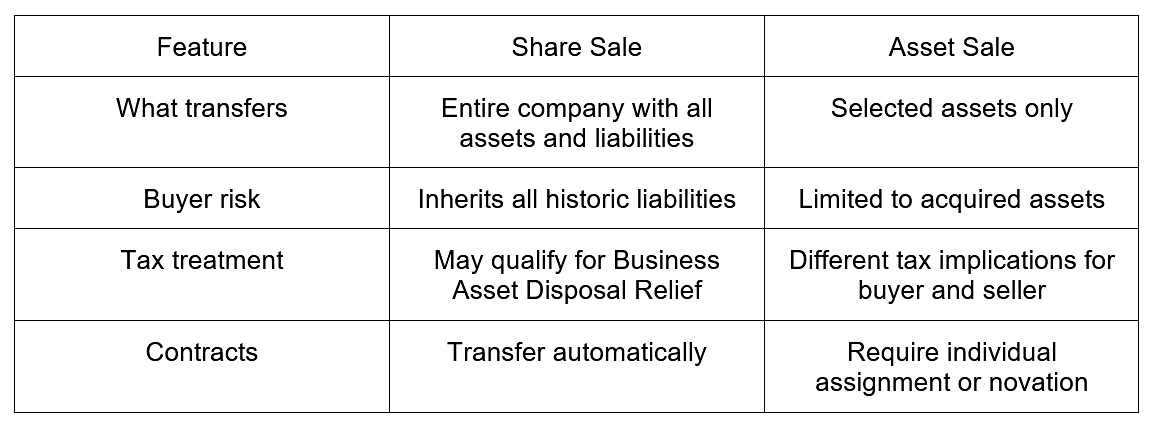
Sellers seeking a straightforward exit often prefer share sales due to simplicity and possible tax advantages.
Buyers may find asset deals suit their risk approach or investment timeline more effectively.
What Due Diligence Actually Involves in a Property-Linked Business
Due diligence refers to the process buyers use to assess a business’s financial and legal position before agreeing terms.
This typically covers financial records, contracts, employees, and liabilities.
Where property is involved, additional checks such as title, planning permissions, and occupation rights are required.
Transactions with significant property interests often face closer scrutiny due to valuation shifts and regulatory factors.
Secure data rooms are now standard, helping streamline document sharing and reduce disruption.
Providing complete, well-organised documentation keeps the process moving.
Delays usually stem from missing paperwork, unclear ownership, or inaccessible contracts.
Preparing several years of accounts, key agreements, employment records, and relevant licences helps avoid common setbacks.
How To Prepare Your Business Before Entering Discussions
Preparation plays a direct role in shaping deal outcomes.
Buyers form early impressions that influence price, warranties, and structure. Clear, up-to-date financials are essential, with one-off costs separated to give an accurate view of performance.
Core corporate records such as updated articles of association and shareholder agreements must be ready for immediate inspection.
Major contracts should be reviewed for change of control clauses, as these may trigger renegotiation or renewal requirements.
Agreements with customers and suppliers often include provisions affecting continuity after deal completion.
Awareness of post-completion obligations helps avoid surprises and ensures the right advisers are in place.
Strong recurring income and efficient operations increase buyer confidence.
Engaging mergers and acquisitions specialists early allows time to resolve issues, anticipate queries, and reduce the risk of late-stage renegotiation.
FAQ: Common Questions from Business Owners
How long does an acquisition or sale typically take?
Many private company share or asset sales reach completion within a few months after headline terms are agreed. Property-heavy or regulated transactions may take longer due to higher due diligence demands. Sellers ready with digital data rooms, up-to-date contracts, and pre-cleared documentation often see the fastest completions.
What is a share purchase agreement?
A share purchase agreement is the main contract in a share sale transaction. It details the purchase price, completion steps, division of risk between buyer and seller, and post-completion obligations. The agreement binds both parties to clear, enforceable terms and typically includes warranties and indemnities to allocate risk.
Do I need a specialist M&A lawyer if I already have an accountant?
Accountants address tax and financial structuring, but only a mergers and acquisitions lawyer has the background needed to draft core contracts, conduct legal due diligence, and reduce the risk of post-sale claims. Combined legal and accountancy support covers all necessary angles for a secure transfer.
What warranties are typically required in a business sale?
Warranties are statements by the seller confirming the accuracy of legal, financial, and employment disclosures. Common warranties cover ownership of assets, absence of litigation, accuracy of financial statements, and compliance with laws. Lack of proper disclosure risks claims after completion, so detailed record-keeping and openness through negotiation help contain these risks from the outset.
The Bottom Line
Business sales and acquisitions in Cheshire require meticulous organisation and accurate documentation to manage risk and support negotiation strength.
Involving advisers with deal experience during initial planning increases the chances of reaching a swift, efficient, and strong agreement.
(featured image free to use pic https://pxhere.com/en/photo/911763)










Recent Comments