






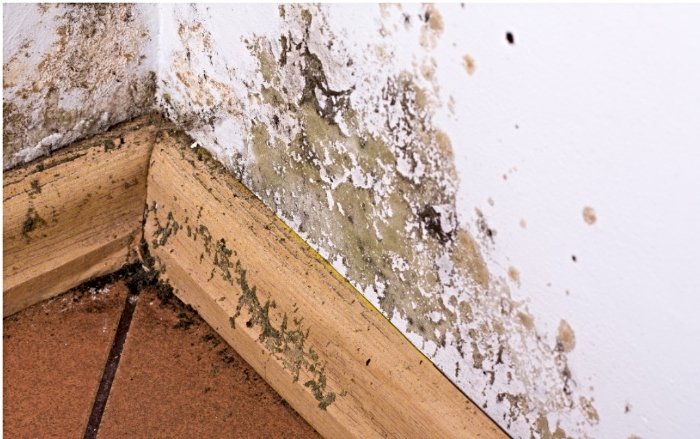
If you’ve ever wiped black mould off a bathroom ceiling only to see it creep back within weeks, you’re not alone.
Mould is one of the most common housing problems in the UK, affecting everything from Victorian terraces to modern new-builds.
The frustrating part is that most people treat the surface growth without ever tackling what’s actually feeding it.
Mould needs moisture to survive, but where that moisture comes from varies hugely from one property to the next.
Stick around to find out what’s really behind the mould in your home and what you can do about it.
Condensation and Poor Ventilation
Condensation is the single biggest cause of mould in UK homes. Every time you cook, shower, dry clothes indoors or even just breathe, you’re adding moisture to the air.
In a well-ventilated property, that moisture escapes. In a poorly ventilated one, it settles on cold surfaces like windowsills, external walls and corners where air doesn’t circulate.
Older properties relied on natural draughts through gaps in windows, floorboards and chimneys to keep air moving.
Many of those gaps have since been sealed through double glazing, draught-proofing and blocked-off fireplaces, creating homes that hold heat better but trap moisture with nowhere to go.
Penetrating Damp from Defective Roofs and Guttering
Penetrating damp happens when water enters the building from outside. Cracked roof tiles, missing pointing, blocked gutters and faulty downpipes are all common entry points.
Rainwater that should be channelled away from the property instead soaks into walls, ceilings and timbers.
The signs are usually localised. You might notice damp patches that worsen after heavy rain, or staining on ceilings below the roofline.
A small leak in the roof space or a slow drip from a cracked gutter joint won’t always show itself straight away. By the time mould appears on a wall, the moisture may have been sitting behind it for months.
Rising Damp and Failed Damp-Proof Courses
Rising damp works from the ground up. Moisture from the soil is drawn upward through the masonry by capillary action.
In most properties built after the 1870s, a damp-proof course (DPC) sits in the brickwork to stop this. But DPCs can fail, especially in older buildings where the original materials have degraded.
You’ll usually see the evidence as a tide mark on internal walls, no higher than about a metre from the floor. The plaster may feel cold and damp to the touch, and paint or wallpaper will start to bubble.
A failed DPC needs proper investigation and repair, usually involving a new chemical DPC or a physical membrane.
Without that, ground-level moisture will keep feeding mould no matter how often you clean.
Energy-Saving Retrofits That Seal Homes Too Tightly
This one catches a lot of homeowners off guard. Millions of UK properties have been retrofitted with insulation, new windows and draught-proofing to improve energy efficiency.
These upgrades do make homes warmer, but if ventilation isn’t upgraded at the same time, they can make mould significantly worse.
A report from the National Engineering Policy Centre confirmed that insulation and airtightness must be balanced with ventilation to prevent moisture build-up.
Seal a house without giving moisture an escape route and humidity climbs rapidly.
Everyday activities can release up to 20 litres of moisture per day in an average household, and in an airtight home, that moisture has nowhere to go.
If you’ve had insulation installed recently and mould has appeared for the first time, the two may well be connected.
Why Cutting Back on Heating Makes Things Worse
The energy crisis has had a direct knock-on effect on mould. Research from Which? found that nearly half of UK households chose not to turn on their heating despite the cold during the worst of the price rises.
When indoor temperatures drop, walls and windows get colder, and cold surfaces are magnets for condensation.
You can’t blame someone for keeping the thermostat low when bills have risen by over 40% compared to pre-crisis levels.
But the consequence is that condensation builds up faster and mould takes hold, often costing more to deal with later than what was saved on heating.
When Surface Cleaning Won’t Cut It
There’s a limit to what bleach and anti-mould sprays will achieve. If the mould keeps returning to the same spots, the underlying moisture source hasn’t been dealt with.
Surface treatments remove what you can see, but spores can embed themselves in plaster, grout, timber and soft furnishings.
Persistent or widespread mould typically requires professional remediation. Luckily, in the UK today, there’s no shortage of mould experts.
Some of the most popular ones, like ICE Cleaning mould removal services, deal with both the visible growth and the underlying moisture source.
A proper assessment will identify whether you’re dealing with condensation, penetrating damp, rising damp or a combination, so treatment can target the root cause.
It’s a Building Problem, Not a Lifestyle Problem
For years, tenants dealing with mould were told it was their fault. Open a window. Stop drying clothes indoors.
While good habits do help, the UK government made its position clear in 2023. According to official guidance, the fundamental causes of damp and mould are building deficiencies, inadequate ventilation, inadequate heating and poor energy efficiency.
Normal household activities shouldn’t be blamed.
This shift came after the death of two-year-old Awaab Ishak, whose family had repeatedly reported mould in their social housing property.
Since then, Awaab’s Law has been introduced to hold social landlords to strict deadlines for investigating and fixing damp and mould.
The same principle applies if you’re a homeowner. You can ventilate perfectly and keep the heating on, but if your DPC has failed or your roof is leaking, mould will keep returning.
Fix the Source, Not Just the Surface
Mould is always a symptom of something else. Whether it’s condensation from poor ventilation, water entering through a damaged roof, moisture rising from the ground or a retrofit that sealed the house too tightly, the fix has to go deeper than a wipe-down.
Start by working out where the moisture is coming from. Check your gutters, look at your DPC, test your extractor fans and think about whether your home’s ventilation matches its level of airtightness.
If the mould is widespread or keeps coming back, get a professional survey to pinpoint the cause and recommend the right course of action.









Recent Comments